How to Choose the Best Technical Ceramic for Your Needs?
When selecting the right technical ceramic for your applications, expert insights can guide you. Dr. Emily Chen, a leading authority in the technical ceramic industry, emphasizes, “Choosing the appropriate ceramic material is crucial for performance and longevity.”
Technical ceramics are known for their unique properties. Durability, heat resistance, and electrical insulation make them suitable for diverse applications. However, not every technical ceramic fits every need. The selection process can be daunting, often requiring a deep understanding of material characteristics and intended use.
Reflecting on this, many users overlook essential factors. Their choices may lead to inefficiencies or early failures. It's vital to consider purpose, environment, and compatibility when selecting technical ceramics. A well-informed decision can significantly impact performance and reliability in demanding conditions.
Understanding the Basics of Technical Ceramics
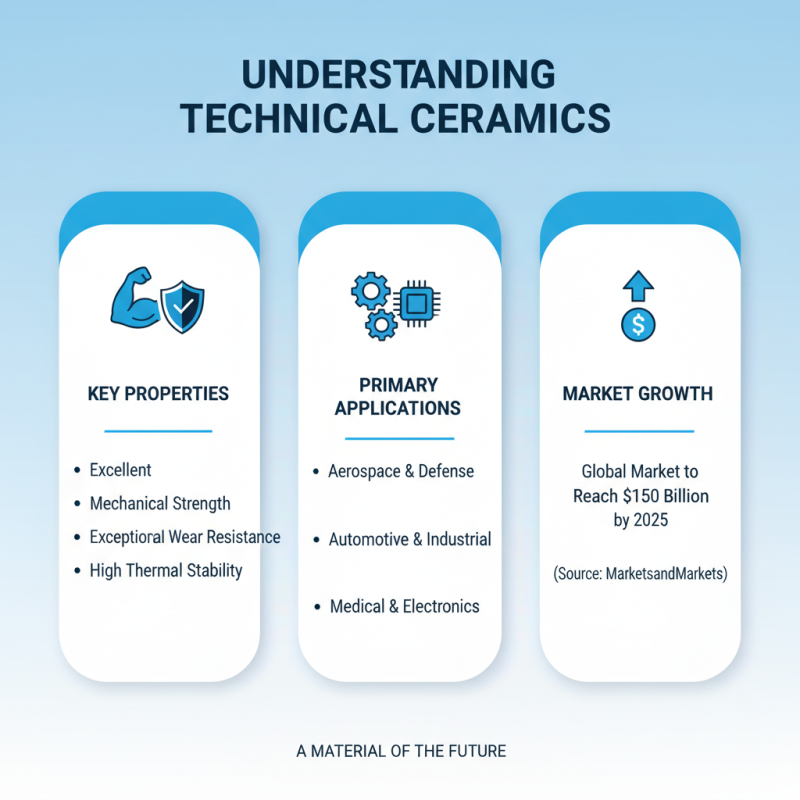
Technical ceramics are specialized materials known for their unique properties. They offer excellent mechanical strength, wear resistance, and thermal stability. According to a report by MarketsandMarkets, the global technical ceramics market is expected to reach $150 billion by 2025, highlighting their increasing importance across various industries.
Understanding the types of technical ceramics is crucial. Common categories include alumina, zirconia, and silicon carbide. Each type serves distinct applications. For instance, alumina is widely used in electrical insulators and cutting tools due to its high hardness. In contrast, zirconia's exceptional toughness makes it suitable for medical implants and precision components. Such materials can endure extreme conditions. However, selecting the right one requires careful consideration of specific application requirements.
A common challenge in technical ceramics is brittleness. While they excel in stability, they can fail under sudden impact. Testing and evaluating wear properties are essential. Many manufacturers still rely on standardized tests, which may not reflect real-world conditions. It's vital to analyze data comprehensively. Therefore, having clear performance metrics can guide better selection, ensuring that the chosen ceramic meets the intended application demands effectively.
Identifying Your Specific Application Requirements
When selecting the right technical ceramic, it’s crucial to understand your specific application. Different ceramics serve varied purposes, from insulation to structural components. Consider factors like temperature resistance, electrical properties, and mechanical strength. Each application has unique demands that can significantly affect performance.
Think about the environment in which the ceramic will operate. For instance, high-temperature applications may require ceramics that can withstand extreme heat without degrading. It’s also essential to evaluate factors like chemical exposure and wear resistance. You might focus on specific characteristics such as thermal conductivity or flexural strength depending on your use case.
Reliability is vital. Not all ceramics will perform as expected under different conditions. It’s worth investigating the reliability and performance history of the ceramic materials you are considering. Engaging with experts in the field can provide deeper insights. Being aware of limitations and potential issues in your selection process allows for informed decision-making.
Evaluating Different Types of Technical Ceramics Available
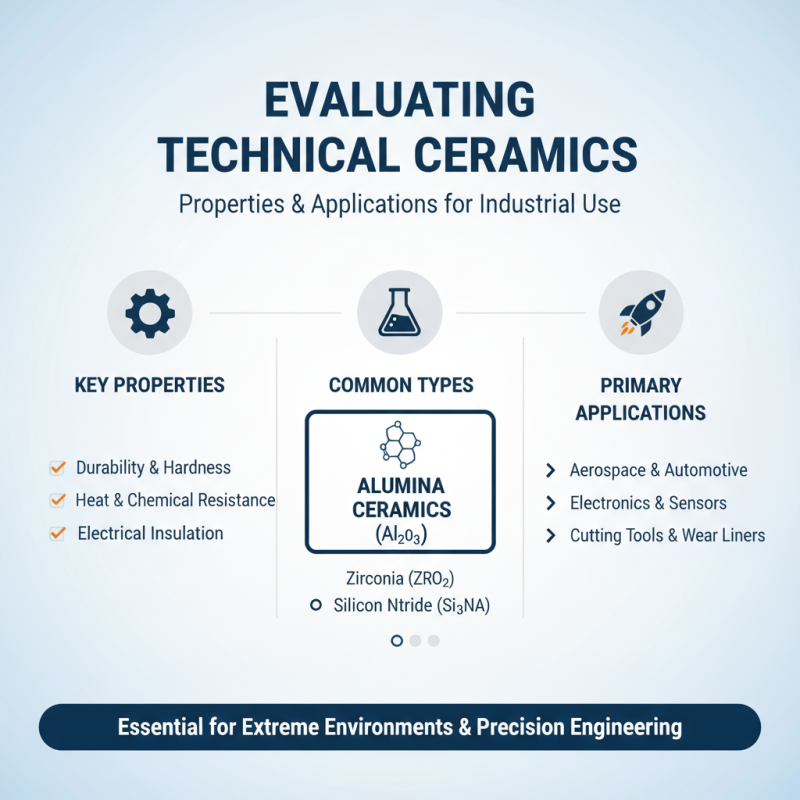
When evaluating different types of technical ceramics, it’s crucial to understand their properties and applications. Technical ceramics, known for their durability and heat resistance, are widely used in industries like aerospace, automotive, and electronics. Alumina ceramics, for instance, offer excellent hardness and wear resistance, making them ideal for cutting tools and wear liners.
Other types, like zirconia, provide exceptional toughness and thermal stability. This makes zirconia ceramics suitable for dental implants and cutting-edge electronics. Silicon nitride is another option, favored for its low thermal expansion and high strength. Its lightweight nature meets the demands of high-performance applications.
Choosing the right ceramic can be complex. Each type has its own advantages and limitations. Consider the specific needs of your project. For example, will temperature fluctuations be an issue? How critical is wear resistance? Engaging with experts in ceramics can provide valuable insights, but be aware that not all information may be reliable. Therefore, asking the right questions will lead to better-informed decisions.
Assessing Performance Properties and Characteristics
When selecting a technical ceramic, understanding its performance properties is crucial. Different applications require various characteristics. For instance, some ceramics perform well under high temperatures, while others excel in electrical insulation. These properties can make a significant difference depending on your specific needs.
Another essential aspect is mechanical strength. Some technical ceramics exhibit high durability, but they may also be brittle. It's important to assess the trade-off between strength and brittleness to ensure reliability in real-world applications. Testing under various conditions can reveal more about how a material behaves.
Surface finish is another consideration. A smooth finish might reduce wear but can also lead to issues in grip or adhesion. Rougher surfaces can enhance performance in some contexts but could cause problems elsewhere. Evaluating these factors with a critical eye will aid in choosing the right ceramic for your project. It’s worth reevaluating choices as new data and technologies emerge.
How to Choose the Best Technical Ceramic for Your Needs? - Assessing Performance Properties and Characteristics
| Ceramic Type |
Mechanical Strength (MPa) |
Thermal Conductivity (W/m·K) |
Thermal Expansion Coefficient (x10-6 K-1) |
Electrical Conductivity (S/m) |
Density (g/cm3) |
| Alumina (Al2O3) |
350 - 600 |
23 |
7.5 |
10-12 |
3.9 |
| Silicon Nitride (Si3N4) |
800 - 900 |
30 |
3.0 |
10-14 |
3.2 |
| Zirconia (ZrO2) |
900 - 1200 |
24 |
10.5 |
10-10 |
6.0 |
| Boron Nitride (BN) |
250 - 400 |
50 |
2.5 |
10-8 |
2.1 |
Considering Cost and Availability in Your Selection Process
When selecting a technical ceramic, cost and availability are critical factors. The global technical ceramics market is projected to grow by 6% annually, highlighting the rising demand. However, prices can vary significantly based on material composition and processing methods. Common ceramics such as alumina may offer lower costs, but specialized materials may exceed budget expectations.
Understanding your budget is essential. Research suppliers to find the best prices. Explore bulk purchasing options to reduce expenses. But remember, lower costs can sometimes equate to compromised quality. This trade-off may affect performance in critical applications. Ensure that any savings align with your project’s needs. Utilize available resources like market reports to gauge current pricing trends.
Availability is another essential consideration. Lead times can impact your project schedules. Some materials may have longer delays due to production constraints. Engage with multiple suppliers to avoid bottlenecks. Think about alternative materials that meet your requirements with shorter lead times. Be aware of changing supply chains, especially in the wake of global events. Being adaptable can save time and reduce stress.
Comparison of Cost and Availability of Different Technical Ceramics