Essential Tips for Choosing the Right Corundum Mullite Plate for Your Needs
In the realm of high-performance ceramics, the selection of the appropriate Corundum Mullite Plate is pivotal for achieving optimal operational efficiency and longevity. As industries increasingly demand materials that can withstand extreme conditions, understanding the intricacies of corundum and mullite combinations becomes essential. According to a recent report by the Global Ceramic Industry Association, the market for advanced ceramic materials, including Corundum Mullite Plates, is projected to grow by 6% annually through 2025, driven by advancements in applications such as aerospace, electronics, and high-temperature furnaces.
Industry expert Dr. Jane Smith emphasizes the significance of informed selection, stating, "Choosing the right Corundum Mullite Plate is not just about material specifications; it’s about understanding the unique requirements of your operation and how these plates will interact with their environment." The decision-making process involves not only the mechanical properties of the Corundum Mullite Plate but also factors such as thermal shock resistance, chemical stability, and cost-effectiveness. As we delve into the essential tips for selecting the ideal Corundum Mullite Plate, it is crucial to consider these diverse factors to ensure optimal performance in challenging applications.

Understanding Corundum Mullite Plates: Composition and Properties
Corundum mullite plates are an essential component in various industrial applications, primarily due to their unique composition and impressive properties. These plates typically consist of a combination of corundum (Al₂O₃) and mullite (3Al₂O₃·2SiO₂), which results in a highly stable material with exceptional thermal resistance. According to industry reports, the addition of corundum enhances the hardness and wear resistance of the plates, making them suitable for high-temperature environments, often exceeding 1600°C. This thermal stability is vital for applications in sectors such as metallurgy, ceramics, and even in advanced refractory systems.
The mechanical properties of corundum mullite plates are equally noteworthy. With a typical compressive strength ranging from 200 to 300 MPa, these plates can withstand significant loads without deforming. Furthermore, their low thermal expansion coefficient contributes to their reliability in thermal shock resistance, making them an ideal choice for processes involving rapid temperature changes. Industry analysts have highlighted that materials with such properties significantly reduce maintenance costs and downtime, reinforcing their value in cost-sensitive production environments. As a result, understanding the detailed composition and properties of corundum mullite plates is critical for selecting the right material for specific operational needs.
Essential Tips for Choosing the Right Corundum Mullite Plate for Your Needs
| Feature |
Description |
Importance |
| Composition |
Made from a mixture of corundum and mullite, providing high strength and thermal stability. |
Critical for durability and performance in high-temperature applications. |
| Thermal Conductivity |
Low thermal conductivity, making it suitable for insulation purposes. |
Essential for energy efficiency in thermal applications. |
| Chemical Resistance |
Resistant to a wide range of chemicals, enhancing its lifespan in reactive environments. |
Important for maintaining performance in various industrial processes. |
| Mechanical Strength |
High mechanical strength allows for better load-bearing capabilities. |
Crucial for applications requiring structural integrity under stress. |
| Size and Thickness Options |
Available in various sizes and thicknesses to meet specific application needs. |
Allows for customization to fit different operational requirements. |
Key Applications of Corundum Mullite Plates in Industry and Technology
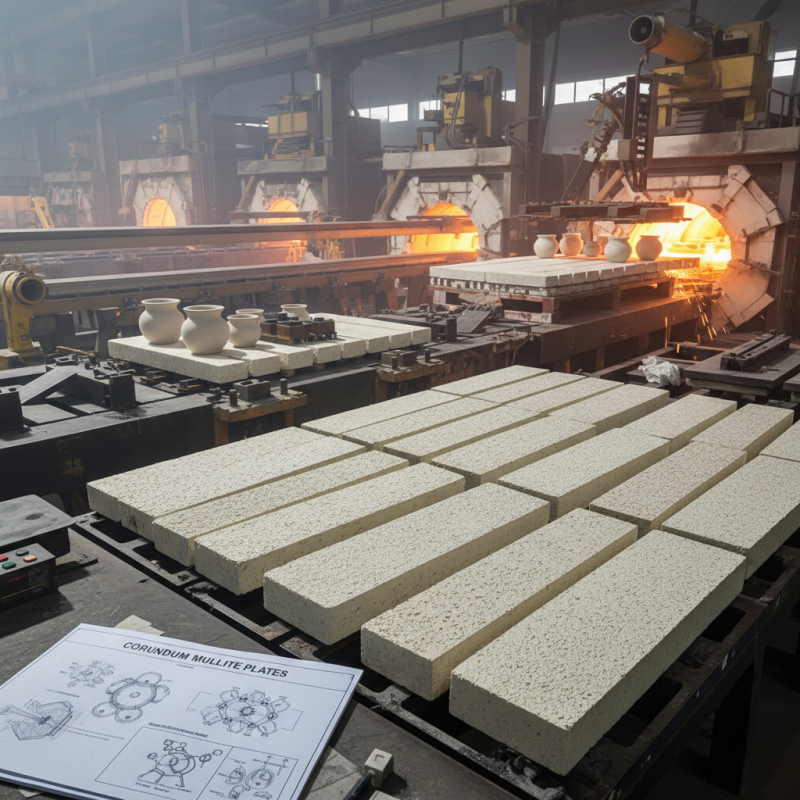
Corundum mullite plates are increasingly valuable in various industrial and technological applications due to their excellent thermal stability, mechanical strength, and resistance to chemical attack. These plates are primarily utilized in industries such as ceramics, metal production, and thermal processing. In the ceramic industry, corundum mullite plates serve as crucial components in kiln fixtures and support systems, providing the necessary durability to withstand high-temperature environments. Their ability to retain structural integrity under thermal shock makes them ideal for applications that require rapid temperature changes.
In metal production, corundum mullite plates are employed in furnaces and molten metal handling systems. Their resistance to oxidation and thermal degradation enhances the longevity of equipment used in these demanding environments. In thermal processing applications, such as glass and ceramics manufacturing, these plates play a significant role in creating efficient insulation, contributing to energy savings and improved process control. The versatility of corundum mullite plates positions them as an essential material in advancing industrial processes and technologies, highlighting their relevance across various sectors.
Factors Influencing the Selection of Corundum Mullite Plates for Specific Use
When selecting corundum mullite plates for specific applications, several key factors must be taken into account. First and foremost is the thermal stability required for the intended use. Corundum mullite plates possess excellent thermal resistance, making them suitable for high-temperature environments. Understanding the specific temperature range your application will involve is crucial, as it will determine the appropriate grade of plate necessary to withstand the thermal stresses.
Another important aspect to consider is the mechanical strength of the plates. Depending on the operational conditions, such as load-bearing requirements and susceptibility to thermal shock, different grades of corundum mullite offer varying levels of durability. It is essential to assess the physical demands of your application to ensure the chosen plate can withstand not only the temperature but also the mechanical forces it may encounter.
Lastly, the chemical environment in which the plates will operate can significantly influence the selection process. Corundum mullite exhibits considerable resistance to acidic and basic substances, but the specific chemical composition of your application should be evaluated to avoid potential degradation. By carefully considering thermal properties, mechanical strength, and chemical resistance, you can make an informed decision that caters to your specific requirements.
Essential Tips for Choosing the Right Corundum Mullite Plate
Performance Metrics: Comparing Corundum Mullite to Other Ceramic Materials
When evaluating the performance of corundum mullite plates in comparison to other ceramic materials, it’s essential to consider various metrics such as thermal stability, mechanical strength, and
resistance to thermal shock. Corundum mullite, known for its excellent thermal properties, can endure extreme temperatures and exhibits minimal thermal expansion, which makes it a preferred choice in high-temperature applications. In contrast, other ceramic materials may not offer the same level of durability under constant thermal cycling, potentially leading to failure in demanding environments.
Another crucial aspect to examine is the mechanical strength of corundum mullite relative to alternatives like alumina or zirconia. Corundum mullite typically demonstrates superior toughness and fracture resistance, which is vital for applications where impact or wear is a concern. Additionally, its lower porosity compared to other ceramics contributes to its durability and makes it less prone to degradation over time. By understanding these performance metrics, you can make a more informed decision when selecting the right ceramic material for your specific needs.
Guidelines for Proper Installation and Maintenance of Corundum Mullite Plates
Proper installation and maintenance of corundum mullite plates are crucial for ensuring their longevity and optimal performance in various applications.
When installing these plates, one must ensure that the surface is clean and free from any debris or contaminants that could interfere with adhesion.
It is advisable to use a suitable adhesive recommended for high-temperature materials, ensuring that it is evenly applied to avoid any weak spots.
Additionally, care should be taken to align the plates properly, as misalignment can lead to thermal stress and premature failure.
Once installed, routine maintenance is key to prolonging the life of corundum mullite plates. Regular inspections should be conducted to check for any signs of wear, cracks, or damage.
If any issues are identified, prompt action should be taken to repair or replace the affected areas. Proper cleaning techniques must also be employed, using non-abrasive tools and allowable cleaning agents that won't compromise the integrity of the material.
Furthermore, it is advisable to monitor the operational environment regularly, ensuring that temperature and load conditions remain within the recommended limits to prevent undue stress on the plates.
By following these guidelines, users can maximize the efficiency and durability of their corundum mullite plates.