Leave Your Message

What Is Porous Alumina Ceramics and How Are They Used?

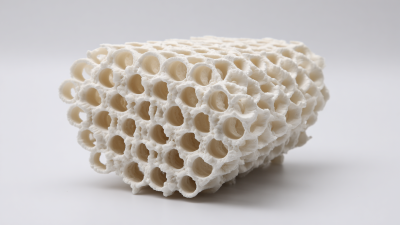
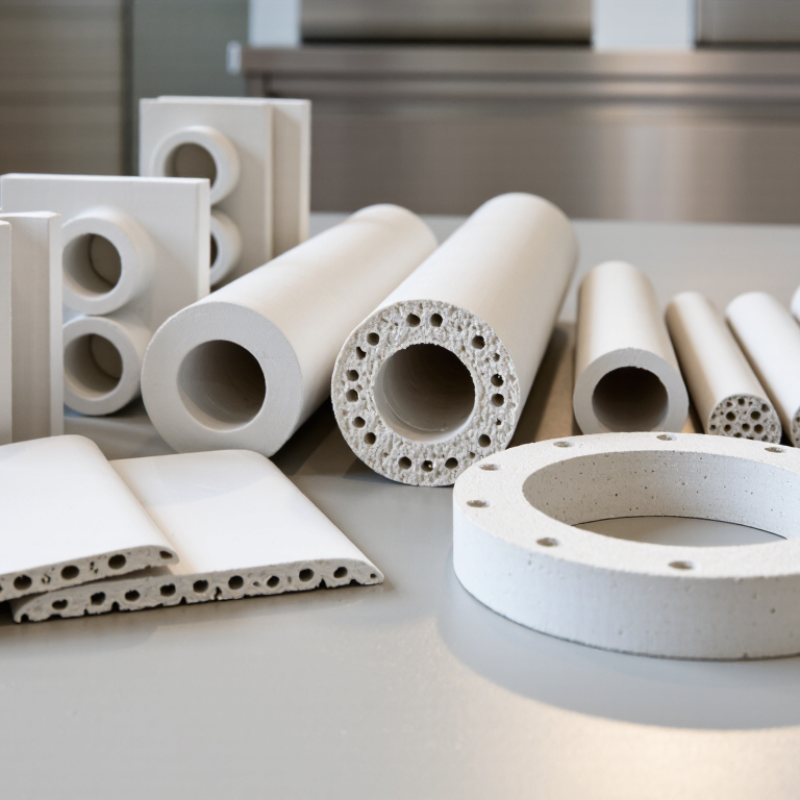
Porous Alumina Ceramics are engineered ceramic materials containing controlled networks of open or closed pores. Alumina provides hardness, chemical stability, and strong resistance to heat. The pores add useful functions, including fluid flow, filtration, insulation, and surface area for chemical reactions. In practical terms, a small porous alumina plate may look solid, yet still allow gas or liquid to pass through its microscopic channels.

Manufacturers adjust pore size, porosity, thickness, and alumina purity for specific performance requirements. These factors influence permeability, mechanical strength, thermal conductivity, and cleaning methods. For example, a fine-pore component can capture smaller particles, but it may create greater pressure loss during filtration. A highly porous structure can improve insulation, yet it may become more fragile under impact. This trade-off matters in real equipment.

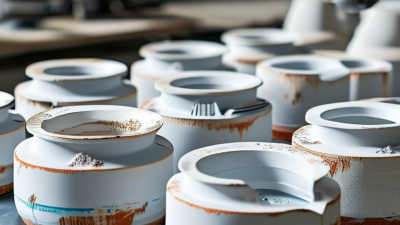
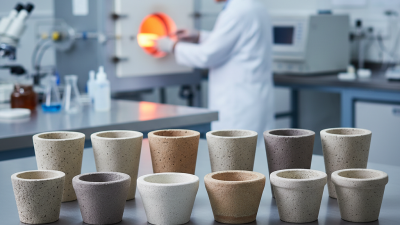
Applications include molten-metal filtration, laboratory crucibles, catalyst supports, gas diffusion parts, and high-temperature insulation. Some designs also support biomedical research, although medical use requires strict testing, traceability, and regulatory approval. Engineers usually examine material certificates, pore-size measurements, thermal-shock data, and chemical compatibility before selecting a component. Product descriptions alone are not enough.

The material is not universally superior. That point deserves attention. Moisture, sudden temperature changes, abrasive particles, or unsuitable cleaning chemicals can reduce service life. Reliable selection depends on actual operating conditions, not only impressive specifications. This article explains how Porous Alumina Ceramics are made, which properties control their performance, and where their advantages become practical. It also considers their limitations, because durable engineering decisions require both evidence and careful reflection.
What Is Porous Alumina Ceramics and How Are They Used?

Definition and Classification: 20–90% Porosity and 0.1–500 μm Pores

What Is Porous Alumina Ceramics and How Are They Used?

Porous alumina ceramics are engineered aluminium oxide bodies containing controlled empty spaces. Their total porosity commonly ranges from 20% to 90%. This range strongly affects strength, permeability, density, and thermal behavior. Pore sizes may extend from 0.1 to 500 μm, so one material can behave very differently from another.

Classification usually considers pore size, pore connectivity, and manufacturing method. Microporous structures contain very fine pores, while macroporous grades allow faster gas or liquid movement. Open pores connect through the ceramic and support filtration, catalyst placement, and fluid distribution. Closed pores remain isolated and mainly reduce weight or slow heat transfer. In practical testing, measured porosity can change with sample preparation and calculation methods. That detail is easy to overlook.

Porous alumina is used in filter elements, furnace supports, sensor housings, and high-temperature insulation. Its chemical stability helps in demanding environments, although concentrated chemicals and sudden temperature changes still require evaluation. A fine-pore component may remove small particles, but it can also create higher pressure loss. A coarse-pore component flows better, yet usually offers less retention. Engineers should match pore structure with operating temperature, pressure, mechanical load, and cleaning method. The classification is useful, but never complete by itself. Real performance depends on geometry, defects, and processing variation. That is where design assumptions sometimes fail.
Manufacturing Processes: 1,400–1,800°C Sintering and Pore-Forming Methods

What Is Porous Alumina Ceramics and How Are They Used?

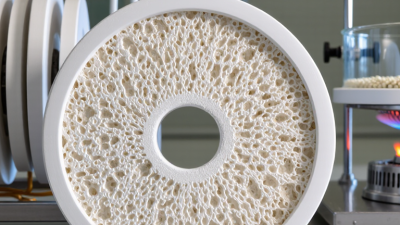
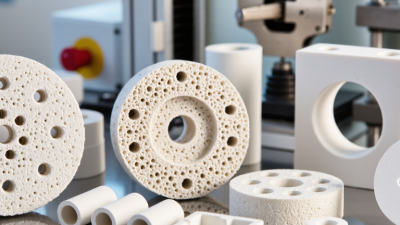
Porous alumina ceramics contain controlled voids within a strong aluminum oxide framework. These pores reduce weight and support filtration, thermal insulation, catalyst carriers, and molten-metal handling. Their performance depends on pore size, shape, connectivity, and wall strength. A component can look uniform, yet contain weak zones inside.

Manufacturing usually begins with alumina powder, binders, and a pore-forming material. Starch, polymer beads, graphite, or fine organic particles can burn out during heating. Foaming and freeze-casting methods create different pore structures. Partial sintering joins powder particles without closing every opening. The firing stage commonly reaches 1,400–1,800°C. At higher temperatures, bonding improves, but pores may shrink or become isolated. I have found that small changes in heating rate can alter permeability noticeably. This process is not perfectly predictable. Batch testing remains necessary.

Tips: Measure porosity and pore distribution, not only density. Use thermogravimetric data to set the burnout schedule. Keep the heating rate slow near binder removal. Inspect cross-sections for blocked channels and cracks. Do not assume a larger pore always improves flow. Service temperature, pressure, and chemical exposure must guide the final design.

Core Properties: 2,050°C Melting Point, Chemical Resistance, and Low Density

Porous alumina ceramics are lightweight, heat-resistant materials containing a controlled network of tiny pores. Their main ingredient, aluminum oxide, has a melting point of about 2,050°C. This high value supports use near intense heat, but it does not define a safe working temperature. Actual limits depend on pore structure, thermal cycling, atmosphere, and component design.

Chemical resistance is another important advantage. Alumina generally withstands many acids, alkalis, molten salts, and corrosive gases better than common metals. However, pores can absorb liquids and trap residues. That detail is easy to overlook.

In practical testing, cleaning methods and pore size often influence service life as much as chemical composition.

Low density comes from the internal voids. Compared with dense alumina, porous grades weigh less and offer greater surface area. Their density varies with porosity, so product data should be checked carefully.

Engineers use these ceramics for hot gas filters, catalyst supports, furnace insulation, molten-metal filters, and breathable protective parts. Fine pores can improve filtration and thermal insulation. Larger pores can reduce pressure loss but weaken the structure.

The trade-off is real. Designers must balance strength, permeability, thermal shock resistance, and chemical exposure rather than selecting the lightest option.

Industrial Applications: Filtration, Catalyst Supports, Insulation, and Bioceramics

Porous alumina ceramics are aluminum oxide materials containing controlled channels and cavities. These pores reduce weight while preserving high temperature resistance, hardness, and chemical stability. Manufacturers adjust pore size through powder selection, forming methods, and sintering conditions. The result may resemble a rigid white sponge, but its internal structure requires careful measurement.

In filtration systems, porous alumina removes particles from hot gases, molten materials, and corrosive liquids. Its thermal stability suits applications where polymer filters would soften or degrade. Engineers also use it as a catalyst support. The ceramic provides a large internal surface area and holds active materials in place. However, pore blockage can reduce flow and weaken performance. Regular testing is essential. Small defects matter.

Porous alumina also works as insulation in furnaces, kilns, and thermal processing equipment. Its air-filled pores slow heat transfer, although excessive porosity can lower mechanical strength. In bioceramics, interconnected pores can encourage bone tissue growth around a carefully designed scaffold. Medical applications demand strict control of purity, pore geometry, strength, and sterilization behavior. A material that performs well in a laboratory may fail under repeated loading. That limitation deserves more attention. Engineers should match porosity with the actual pressure, temperature, and chemical environment instead of treating all porous alumina as identical.

What Is Porous Alumina Ceramics and How Are They Used? — Industrial Applications: Filtration, Catalyst Supports, Insulation, and Bioceramics
Application Area Typical Pore Structure or Grade Operating Temperature Key Functional Properties Typical Uses Main Advantages Important Design Considerations
Filtration Open-cell or interconnected pores; commonly selected with pore sizes from approximately 1 µm to several hundred micrometres, depending on the filtration duty. Commonly suitable for elevated-temperature service; the practical limit depends on porosity, thermal shock, sealing, and the surrounding equipment. Chemical resistance, high-temperature stability, low reactivity, and controlled permeability. Hot-gas filtration, molten-metal filtration, particulate removal, laboratory filtration, and separation of solids from process liquids. Non-combustible, rigid at high temperature, reusable in suitable conditions, and resistant to many acids and alkalis. Filtration efficiency depends on pore size distribution, tortuosity, thickness, pressure drop, and the compatibility of the ceramic with the filtered medium.
Catalyst Supports Porous structures with micro-, meso-, or macropores; pore volume and surface area are tailored to improve catalyst dispersion and reactant transport. Often used in high-temperature chemical processing, subject to catalyst chemistry, thermal cycling, and reactor conditions. High thermal stability, mechanical rigidity, chemical durability, and a surface that can be modified to anchor active catalyst phases. Fixed-bed reactors, oxidation processes, hydrogen-related reactions, environmental catalysis, and chemical synthesis. Helps distribute active materials, supports repeated heating cycles, and can reduce catalyst movement or agglomeration. Pore size must balance surface area with mass transfer. Excessively fine pores can restrict diffusion, while large pores may reduce available active surface area.
Thermal Insulation High-porosity, low-density structures with largely closed or carefully controlled interconnected pores to reduce solid and gas-phase heat transfer. Alumina-based insulation can operate at very high temperatures; actual service temperature depends on density, atmosphere, thermal gradients, and mechanical load. Low thermal conductivity relative to dense alumina, non-combustibility, low vapor pressure, and resistance to many high-temperature environments. Furnace linings, kiln furniture insulation, high-temperature spacers, radiant heat barriers, and thermal protection components. Maintains dimensional stability better than many conventional insulating materials at high temperature and does not emit combustible gases. Higher porosity generally improves insulation but reduces strength. Moisture, thermal shock, mechanical impact, and shrinkage must be evaluated during design.
Bioceramics Interconnected macropores are often designed in the approximate range of 100–500 µm for tissue-ingrowth research and selected bone-regeneration applications; the suitable range depends on the intended biological function. Normally used at physiological temperatures after processing and sterilization. Manufacturing temperatures are much higher and must be controlled to preserve the desired phase and pore architecture. High hardness, wear resistance, chemical stability, and the ability to provide a three-dimensional scaffold architecture. Research scaffolds, bone-substitute development, implant components, and porous structures for controlled biological integration. Alumina is relatively inert, mechanically strong, and resistant to wear and corrosion in many bodily environments. Pure alumina is generally less bioactive than calcium-phosphate ceramics. Pore interconnectivity, surface chemistry, sterilization, strength, and regulatory validation are essential considerations.
Acoustic and Flow Control Open pores and engineered channels that provide controlled fluid resistance and energy dissipation. Suitable temperature depends on the surrounding assembly, thermal gradients, and the selected porous structure. Rigid ceramic framework, resistance to heat and chemicals, and controllable pressure drop or acoustic attenuation. High-temperature mufflers, burner components, flow distributors, and selected industrial sound-attenuation systems. Performs in environments where polymeric foams may soften, burn, or chemically degrade. Pressure loss, vibration, erosion, pore blockage, and thermal shock should be tested under actual operating conditions.
Wicking and Capillary Transport Fine interconnected pores that promote capillary movement of liquids; pore dimensions are selected according to viscosity, surface tension, and required flow. The usable temperature range is determined by the liquid, thermal cycling, and dimensional stability requirements. Controlled liquid transport, chemical resistance, dimensional stability, and compatibility with repeated wetting and drying in suitable media. Fluid distributors, heat-transfer components, laboratory devices, and specialized capillary systems. Provides predictable capillary action without the flammability concerns associated with many organic porous materials. Pore blockage, contamination, wetting behavior, evaporation, and permeability changes must be considered when selecting the material.
General Material Characteristics Porosity may be open, closed, or mixed. Increasing total porosity generally lowers density and thermal conductivity while also reducing mechanical strength. Dense alumina is known for high-temperature capability; porous grades require application-specific testing because pores increase sensitivity to thermal shock and mechanical damage. Aluminum oxide composition, pore size distribution, pore connectivity, bulk density, permeability, surface area, and fracture strength. Used wherever a combination of ceramic durability and engineered void space is required. Non-combustibility, high hardness, corrosion resistance, electrical insulation, and stability in many demanding environments. Performance is not defined by porosity alone. Material selection should also include density, pore morphology, strength, thermal conductivity, surface finish, and chemical compatibility.
Note: Values and ranges are representative engineering guidelines rather than universal specifications. Final selection should be based on application-specific testing and the manufacturer's material data.

Material Selection: Balancing Pore Size, Permeability, Strength, and Purity

Porous alumina ceramics are aluminum oxide bodies containing interconnected or closed pores. Manufacturers create them by controlling powder packing, additives, and sintering temperature. Open pores allow gases or liquids to pass, while closed pores mainly reduce weight and thermal conductivity. These ceramics serve in filters, gas distributors, catalyst supports, burner diffusers, and thermal barriers. Their usefulness depends less on maximum porosity than on choosing the right pore network.

Pore size sets the first compromise. Fine pores improve filtration and surface area, but they increase flow resistance and can clog easily. Coarser pores provide higher permeability, yet they may weaken the structure and reduce particle retention. Small pores resist flow. Strength usually falls as total porosity rises, especially when pores are irregular or sharply connected. A component facing pressure, vibration, or thermal shock needs more than a nominal porosity value. Pore shape, wall thickness, and defect distribution also matter. Testing should include permeability, flexural strength, thermal cycling, and dimensional stability at service temperatures.

Purity deserves equal attention. Trace silica, alkali compounds, or processing residues can alter dielectric behavior, corrosion resistance, and high-temperature performance. For demanding service, verify chemical analysis and batch consistency rather than relying on a catalog label. In practice, compare several grades using the actual fluid, pressure, and temperature. A perfect balance rarely exists. Higher purity may raise cost, while stronger grades may restrict flow. That tradeoff should be documented before production, because a small pore-size shift can change performance more than expected.