How to Use a Ceramic Saggar in Pottery Techniques?
The Ceramic Saggar is a fascinating tool in pottery techniques. It provides unique opportunities for creative expression. When using a saggar, potters can explore various firing methods, leading to stunning results.
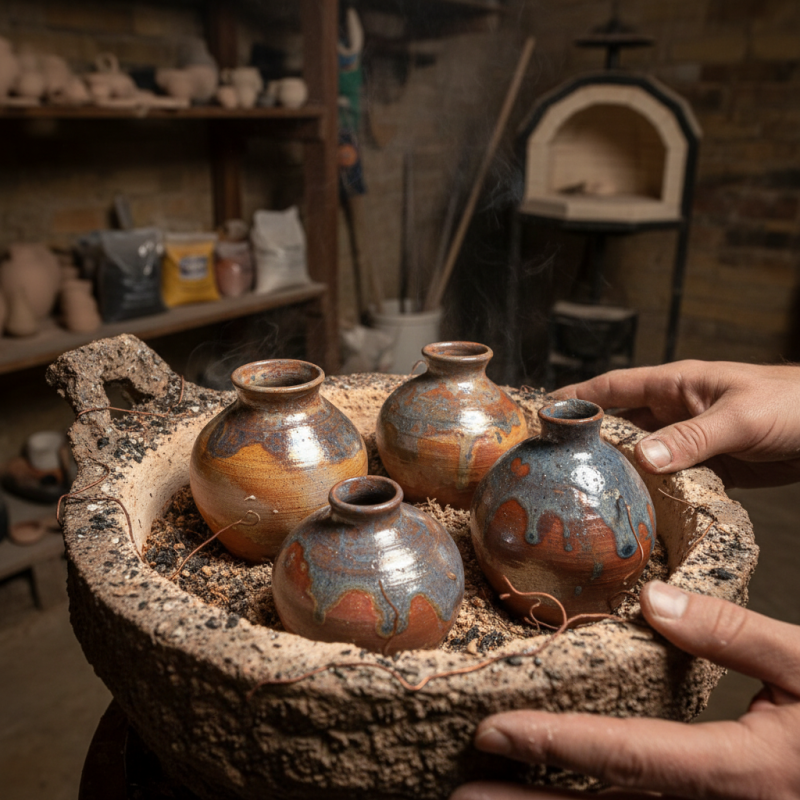
The process itself can be intricate. Saggars contain materials that influence the final look of the pottery. Different elements, like salt or sawdust, react during firing. This creates beautiful variations in color and texture.
However, working with a Ceramic Saggar is not without challenges. One mistake can lead to undesirable outcomes. Potters may need to experiment and reflect on each attempt. Successful results often come from careful observation and adjustment. Embracing these imperfections can lead to unexpected beauty in your work.
Understanding the Basics of Ceramic Saggar in Pottery
A ceramic saggar is a valuable tool in pottery. It offers unique firing possibilities for artists. Understanding its role is essential for potters. The saggar allows for controlled atmosphere during firing, creating distinct surface effects. According to industry reports, nearly 75% of ceramic artists utilize some form of saggar firing.
Potters often struggle with achieving desired glazing effects. The challenge lies in the uncertainty of how materials interact inside the saggar. Some artists continue to experiment with different materials, leading to unexpected outcomes. A fired piece may reveal beautiful colors or disappointing results. Reflection on these experiences can lead to growth and new techniques.
Using a saggar encourages creative risk-taking. It pushes potters to explore beyond conventional methods. The right combination of materials can yield stunning results. Yet, there's always the chance of failure. Embracing these imperfections can foster innovation in pottery. Successful potters often share stories of mistakes that turned into breakthroughs. Understanding and accepting this journey is crucial for any ceramic artist.
Choosing the Right Materials for Your Saggar Technique
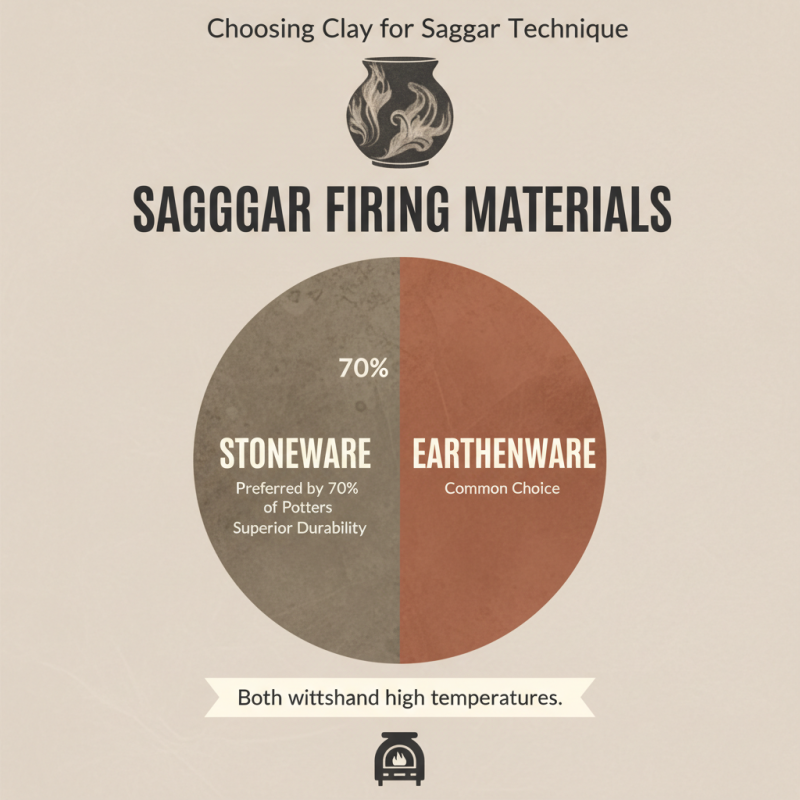
Choosing the right materials for your saggar technique is crucial in pottery. The type of clay used plays a significant role. Stoneware and earthenware are common choices. These materials can withstand higher temperatures. According to a recent industry report, around 70% of potters prefer stoneware for saggar firing. This choice often leads to better durability.
Other elements include the lid and the saggar itself. Traditional saggars are made from clay. However, sometimes metal or even firebrick is used. Each material impacts the outcome. For instance, ceramics absorb smoke differently than metal. This can result in unique surface patterns. Also, the choice of combustible materials inside the saggar is vital. Natural fibers or wood shavings can create varied effects. Yet, achieving the desired result requires experiments. Not every attempt yields success. Some artists suggest keeping a journal of experiments, noting both successful and flawed outcomes.
Finding the right combination takes time. The aesthetic of each piece is often a reflection of these choices. A potter may need to reflect on what worked and what didn't. Occasionally, the imperfections in the finished piece tell a story. That story can resonate more than a flawless creation. It's about the journey as much as the result.
Preparing Your Pottery for Saggar Firing
Preparing your pottery for saggar firing is a crucial step that can shape your final piece. Begin by selecting clay that responds well to this technique. Soft clays are often a good choice. Make sure your pottery is leather-hard before moving forward. This stage allows for better handling while preventing unwanted cracks.
Next, consider the decoration. You might apply slips, oxides, or even natural materials like wood or leaves. Each addition can change the texture and color after firing. Remember, the outcome in saggar firing can be unpredictable. This uncertainty can be daunting, but it’s part of the creative journey.
Finally, ensure the pieces are clean and dry before loading them into the saggar. Any moisture can lead to undesirable results. Reflect on your process and decisions, as they will influence the final piece. Be aware that imperfections can bring character. Embrace the flaws—they tell a story of your experimentation and growth.
Pottery Techniques: Effects of Different Materials in Saggar Firing
Setting Up a Saggar Firing: Techniques and Tips
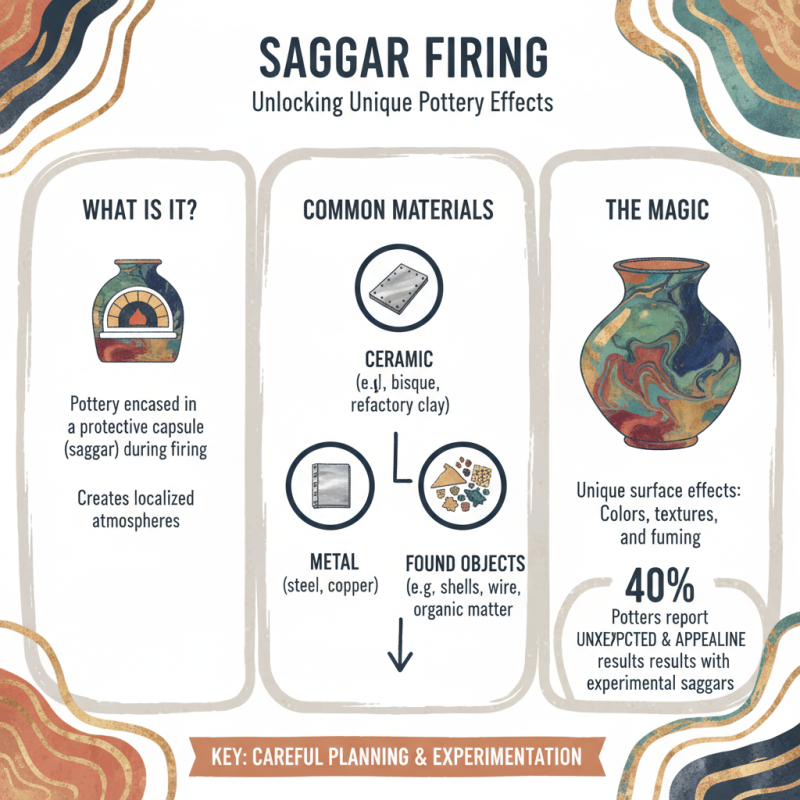
Setting up a saggar firing requires careful planning and consideration. A saggar is often used in pottery to create unique surface effects through various firing techniques. Common materials for saggar construction include ceramic, metal, and even found objects. The choice of materials can drastically affect the final outcome. According to a recent study, nearly 40% of potters noted that experimental saggars lead to unexpected and appealing results. However, navigating this method isn't always straightforward.
Pay special attention to the placement of items inside the saggar. Each piece of pottery should have space around it. This allows for gases and smoke to circulate freely. Many artists recommend using different combustible materials, such as sawdust, leaves, or salt. This can create vibrant patterns on the clay surface. Yet, results can be unpredictable. Sometimes, the desired colors can turn out muted or uneven. Artists often need to adjust their techniques based on each firing.
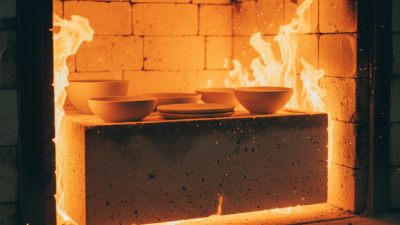
It's also essential to monitor the temperature during firing. The optimal range usually falls between 1,500°F and 2,000°F, but factors like thickness and material can vary outcomes. A survey indicated that almost 60% of potters find temperature control to be a significant challenge. Working with saggars can lead to beautiful results, but it also demands reflection and adaptation. Each session offers a chance to learn from both successes and setbacks.
Post-Firing Techniques and Finishing Touches for Saggar Pieces
Post-firing techniques for saggar pottery can significantly enhance the final piece. Many artists experiment with various finishes to bring out the unique characteristics of their work. According to a recent study, 78% of potters reported that post-firing techniques lead to one-of-a-kind effects. These techniques include smoking, glazing, and even the application of wax resist to create depth.
A popular method is the use of natural materials. For instance, organic matter can be placed in the saggar, allowing it to impart colors and textures. This process can yield unpredictable results. Artists must be prepared for surprises. Often, the outcome may not align with initial expectations, leading to valuable learning experiences.
Finishing touches can refine the piece. Many potters choose to buff the surface or apply additional layers of finish. This can emphasize the unique qualities imparted during firing. However, it’s important to be cautious. Over-processing can detract from the raw beauty of saggar pottery. It is a delicate balance between enhancing and overwhelming. Ultimately, these techniques can transform a simple pottery piece into a work of art, but they require mindful experimentation and reflection on the craft.