Leave Your Message

Why Choose Alumina Ceramic for Industrial Applications?

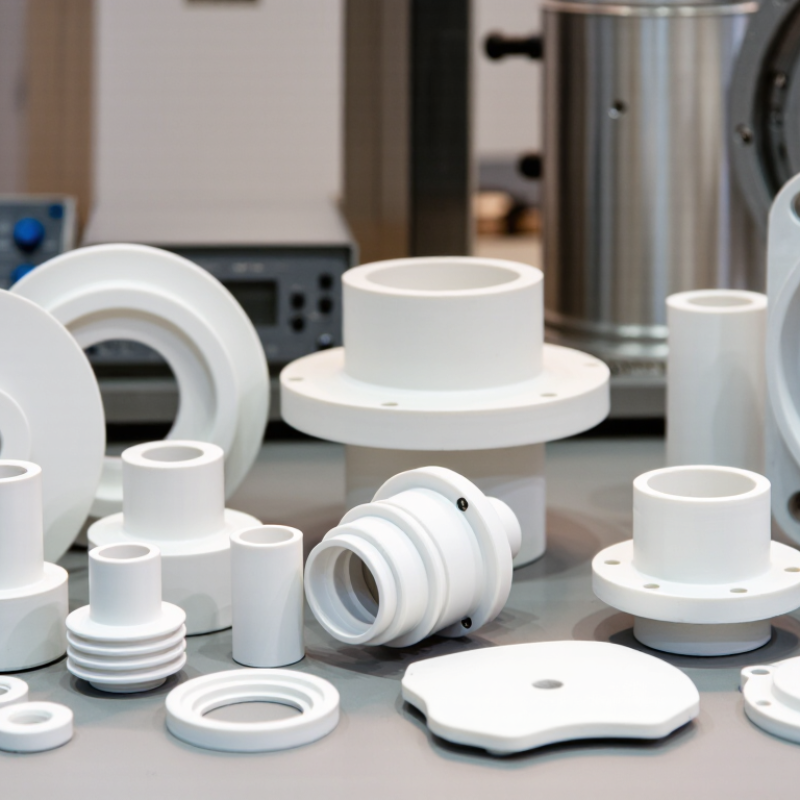
Choosing the right material can determine whether an industrial component survives months of heat, abrasion, and chemical exposure. This is where Alumina Ceramic deserves serious attention. Its high hardness, electrical insulation, thermal stability, and corrosion resistance support demanding applications in electronics, semiconductor equipment, pumps, seals, wear liners, and laboratory systems.

W. David Kingery, a leading authority in ceramic science, famously wrote, “The history of ceramics is the history of civilization.” His observation reminds us that ceramics are not experimental curiosities. They are engineered materials with a long record of practical use. Modern Alumina Ceramic continues that tradition through controlled purity, precise forming, and carefully managed sintering.

Performance depends on more than a material datasheet. A 99.5% alumina part may resist wear effectively, yet its brittleness requires thoughtful design. Sharp corners, sudden temperature changes, poor mounting, or uneven loading can create failure points. Engineers should examine real operating conditions, including contact pressure, thermal cycling, tolerances, and cleaning chemicals.

No material is perfect.

That matters.

Alumina Ceramic can outperform metals in insulation and abrasive environments, but it may not suit every impact-heavy application. Cost, machining difficulty, and lead time also deserve honest evaluation. A reliable selection process combines laboratory data with field experience, supplier quality controls, and application-specific testing. This article explores why industries choose Alumina Ceramic, where it performs best, and which limitations should influence the final decision.
Why Choose Alumina Ceramic for Industrial Applications?

Alumina Grades: Comparing 95–99.9% Al₂O₃ Purity and Performance

Alumina ceramic is not one material with one performance level. Its behavior changes sharply between 95%, 96%, 99%, and 99.9% Al₂O₃ grades. The USGS Mineral Commodity Summaries 2024 estimated global alumina production at roughly 140 million metric tons in 2023. That scale supports reliable raw-material supply, but ceramic performance depends on processing, not purity alone.

A 95% alumina grade usually offers lower cost and practical toughness for wear liners, pump components, and electrical insulators. Typical hardness approaches 9 Mohs, while thermal conductivity often remains near 18–25 W/m·K. According to ASM Handbook, Volume 2, higher-purity alumina can provide better dielectric stability and improved resistance to chemical attack. At 99.9% purity, thermal conductivity may exceed 30 W/m·K when density and grain structure are well controlled. Small pores can still reduce strength.

Purity is only part of the decision. Grain size, sintering temperature, surface finish, and component geometry can change service life. A 99.9% grade may fail prematurely if sharp corners create stress concentration. I have seen this overlooked in high-temperature fixtures. It is an imperfect assumption. For wet abrasion, 95% alumina may be adequate. For semiconductor handling, vacuum systems, or high-voltage parts, 99.9% purity can justify its higher price. The right comparison should include density, flexural strength, dielectric loss, thermal shock resistance, and batch inspection data. Good specifications leave room for doubt.
Mechanical Strength: 2–3 GPa Compression and Mohs 9 Hardness

Alumina ceramic earns attention where heavy loads and abrasive contact occur. Its compressive strength commonly reaches 2–3 GPa, depending on purity, porosity, and testing conditions. This strength helps components withstand concentrated pressure without permanent deformation. Valve seats, wear plates, pump parts, and forming tools can benefit from that resistance. Mohs 9 hardness provides another practical advantage. Only diamond and a few materials rank harder. Fine grit, mineral particles, and sliding contact therefore remove material slowly from a properly designed surface.

In engineering reviews, hardness alone never decides material selection. Load direction, surface finish, temperature, and mounting pressure also matter. A ceramic liner may remain smooth after long service, while a metal counterpart develops grooves. This can reduce maintenance intervals and protect dimensional accuracy. The result depends on good alignment. Small installation errors can create edge stress and local cracking.

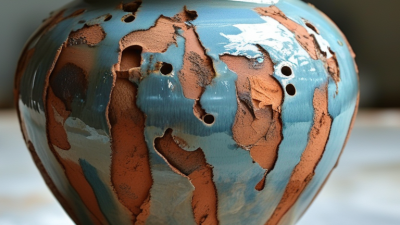
Alumina is strong under compression, but it is brittle under impact, tension, and bending. Sudden shocks can damage it even when average loads appear acceptable. Thermal gradients may create similar problems. Engineers should verify fracture toughness, thermal expansion, and safety factors before approving a component. The stated 2–3 GPa range is not a guarantee for every grade or shape. Test data must match the real geometry and operating environment. That assumption needs checking.

Thermal Reliability: Operating Temperatures Above 1,500°C

Why Choose Alumina Ceramic for Industrial Applications?

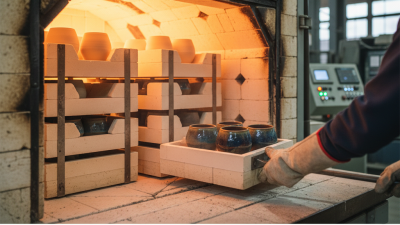
Alumina ceramic remains a practical choice when equipment faces temperatures above 1,500°C. Its high melting point supports stable performance inside furnaces, heating assemblies, and laboratory tubes. Components retain their shape better than many metals under prolonged heat. They also resist oxidation, electrical conduction, and chemical attack from several process environments.

Thermal reliability depends on more than a temperature rating. Engineers examine purity, wall thickness, surface finish, and heating speed before selecting a part. A dense alumina tube may survive a steady 1,600°C cycle. It can still crack during sudden cooling. Field inspections often reveal damage around sharp corners, mounting points, and uneven supports. Small details matter.

Alumina also provides strong electrical insulation near active heating zones. This helps protect sensors, terminals, and controlled power systems. However, it is not flawless. Repeated thermal shocks can create hidden microcracks before visible failure appears. Careful installation, gradual temperature changes, and scheduled inspection improve reliability. Test data should match the actual atmosphere, load, and cycle time. A laboratory result alone may not predict production performance.

Why Choose Alumina Ceramic for Industrial Applications? - Thermal Reliability: Operating Temperatures Above 1,500°C

Thermal Reliability Dimension Typical Alumina Ceramic Data Industrial Significance Above 1,500°C
Maximum Temperature Capability Melting point: approximately 2,050–2,070°C. Practical continuous service is commonly designed within approximately 1,500–1,800°C, depending on purity, load, atmosphere, geometry, and furnace conditions. Provides a substantial temperature margin between the operating temperature and the melting point. Actual component limits must account for mechanical load, thermal gradients, insulation, joints, and furnace atmosphere.
Alumina Purity and Temperature Stability High-alumina ceramics generally contain approximately 95–99.9% Al₂O₃. Higher-purity grades typically contain fewer glassy or secondary phases. Higher purity usually improves resistance to phase-related softening, volatilization, chemical contamination, and grain-boundary degradation at elevated temperatures.
Thermal Conductivity Approximately 20–35 W/(m·K) at room temperature for many dense grades; thermal conductivity generally decreases as temperature increases. Moderate thermal conductivity helps alumina function as an electrical insulator while still allowing heat to be conducted through supports, tubes, setters, and furnace fixtures.
Coefficient of Thermal Expansion Approximately 7–9 × 10⁻⁶ K⁻¹ over a broad temperature range, with the exact value depending on composition and temperature. The relatively low expansion limits dimensional change during heating and cooling and helps reduce thermal-stress buildup compared with many metallic materials.
Electrical Insulation at High Temperature High electrical resistivity at room temperature; resistivity decreases as temperature rises. Performance depends strongly on purity, moisture, contamination, frequency, and applied voltage. Alumina can provide electrical isolation in high-temperature heaters, feedthroughs, thermocouple protection tubes, and insulating supports, provided the electrical design includes high-temperature leakage effects.
Compressive Strength Dense alumina commonly exhibits compressive strength in the multi-gigapascal range at room temperature; strength varies with porosity, grain size, surface condition, temperature, and loading rate. Strong compressive performance supports the use of alumina for kiln furniture, load-bearing insulators, spacers, and high-temperature wear components. Tensile and bending stresses require more conservative design.
Thermal Shock Resistance Generally moderate rather than exceptional. Thermal-shock resistance improves with lower thickness, controlled heating and cooling rates, lower thermal gradients, and suitable microstructure. Alumina is highly temperature-capable but should not be exposed to sudden temperature changes without analysis. Rounded corners, uniform wall thickness, and gradual ramps help reduce cracking risk.
Chemical Stability Good resistance to oxidation and many molten materials, slags, and process chemicals; compatibility depends on composition, temperature, contact time, and the specific corrosive medium. Supports long service life in furnace linings, crucibles, reaction tubes, thermocouple protection tubes, and semiconductor-processing fixtures when chemical compatibility has been verified.
Oxidizing Atmospheres Alumina is intrinsically non-combustible and remains stable in air and many oxidizing environments at temperatures well above 1,500°C. Unlike many metals, alumina does not form a continuously growing oxidation scale that consumes the component, making it suitable for exposed high-temperature fixtures and insulators.
Vacuum and Inert-Gas Service Dense, high-purity alumina is widely used in vacuum and inert-gas equipment; outgassing and contamination depend on porosity, surface finish, cleaning, seals, and processing history. Useful for high-temperature vacuum furnaces, sputtering systems, diffusion equipment, and controlled-atmosphere processing, where low contamination and dimensional stability are important.
Wear and Erosion Resistance High hardness, typically around 9 on the Mohs scale, with good resistance to abrasive wear. Performance depends on density, microstructure, impact energy, and counterface material. Enables use in high-temperature guides, feed-throughs, nozzles, liners, and handling components exposed to abrasive powders or particles.
Dimensional Stability Low thermal expansion and high-temperature rigidity; dimensional change is affected by grain growth, creep, applied stress, porosity, and prolonged exposure. Helps maintain alignment, spacing, and electrical clearances in furnace fixtures and precision thermal-processing components during repeated heating cycles.
Common Industrial Applications Kiln furniture, furnace tubes, crucibles, thermocouple protection tubes, heater supports, electrical insulators, semiconductor fixtures, wear parts, and high-temperature spacers. The combination of high melting temperature, chemical stability, electrical insulation, hardness, and moderate thermal expansion makes alumina a versatile choice for demanding industrial environments.

Note: The values shown are typical engineering ranges for dense alumina ceramics compiled from commonly reported material data. Final service temperature and component life depend on alumina purity, density, porosity, dimensions, stress state, heating and cooling rates, atmosphere, chemical exposure, and joining method.

Electrical Insulation: Dielectric Strength of 10–15 kV/mm

Why Choose Alumina Ceramic for Industrial Applications?

Alumina ceramic is widely selected when electrical insulation must remain stable under heat, voltage, and mechanical stress. Engineering data commonly places its dielectric strength near 10–15 kV/mm, depending on purity, density, and test conditions. That range is significant. A 2 mm section may theoretically withstand 20–30 kV before breakdown. Real assemblies usually require a larger safety margin.

Published test methods, including ASTM D149 and IEC 60243-1, show why material values need careful interpretation. Surface contamination, moisture, electrode shape, and internal pores can reduce insulation performance. Alumina’s low porosity and high hardness help protect against tracking and abrasion. In practical production, clean handling matters. A tiny chip near a sharp edge can concentrate electric fields. The result may differ from laboratory data. This is often overlooked.

Tips: Specify alumina purity, thickness, surface finish, and test voltage together. Ask for batch-level dielectric results, not only a catalogue value. Check performance after thermal cycling and humidity exposure. Keep creepage distances generous. The 10–15 kV/mm figure is useful, but it is not a promise. Experienced designers verify the complete assembly under realistic conditions.

Industrial Uses: Wear Linings, Seals, Substrates, and Insulators

Why Choose Alumina Ceramic for Industrial Applications?

Alumina ceramic earns its place where abrasion, heat, and electrical isolation meet. In wear linings, it protects chutes, hoppers, and cyclone walls from sliding particles. A dense 92–99% alumina grade can resist severe erosion, although impact strength varies with formulation and geometry. The U.S. Geological Survey reported approximately 140 million metric tons of alumina produced globally in 2023. That scale supports stable raw-material availability, but it does not guarantee identical ceramic quality. Site testing still matters.

For seals, alumina offers low friction, chemical resistance, and dimensional stability in demanding pumps and valves. Engineers also use it for substrates in power electronics because it combines dielectric insulation with useful thermal conductivity. As an insulator, it separates energized components inside furnaces, sensors, and high-voltage assemblies. ASTM C1161 flexural-strength testing can help compare grades, while thermal-shock testing reveals weaknesses that ordinary strength data may hide. A harder lining is not automatically the better lining. I have seen premature cracking follow poor corner design and uneven installation.

Tips: Match alumina purity to the actual wear mechanism. Check particle size, impact angle, operating temperature, and seal pressure. Leave room for thermal expansion. The U.S. Department of Energy’s Industrial Decarbonization Roadmap also highlights process heat as a major industrial energy challenge, making durable insulating components increasingly valuable. Yet alumina is not perfect; sudden temperature changes and concentrated impacts remain practical concerns.