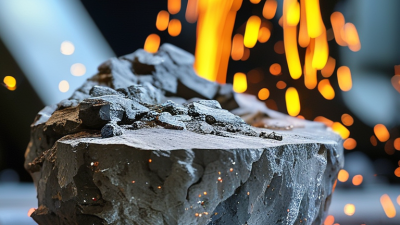
Choosing the right Corundum Mullite Plate can determine whether an industrial kiln runs reliably or fails prematurely. The decision involves more than comparing alumina percentages. Temperature, load, atmosphere, thermal cycling, and installation conditions all matter. A plate supporting heavy setters at 1,500°C faces different demands from one used in a roller kiln.
Ceramics expert W. David Kingery stated, “The properties of ceramics are determined by their microstructure.” This principle remains highly relevant when evaluating Corundum Mullite Plate. A dense structure may improve resistance to abrasion and molten-material penetration. Mullite formation can support thermal-shock performance and dimensional stability. However, a stronger specification does not automatically guarantee better service. It may increase cost, weight, or sensitivity to uneven heating.
Look closely.
This guide examines the practical factors behind plate selection. It considers bulk density, apparent porosity, corrosion resistance, flexural strength, thermal expansion, and working temperature. It also addresses plate thickness, span length, edge support, and kiln atmosphere. Small details matter. A poorly supported plate can crack even when its laboratory data appears excellent.
Reliable selection should begin with actual operating records. Note the heating rate, cooling rate, load distribution, and failure location. Photographs of warping, corner chipping, or surface glazing can help suppliers recommend a suitable grade. I have seen specifications chosen from catalog tables alone, and that approach is sometimes too narrow. Testing remains valuable, but field experience should challenge assumptions. The best Corundum Mullite Plate is not simply the strongest product; it is the plate matched carefully to the kiln’s real stresses.
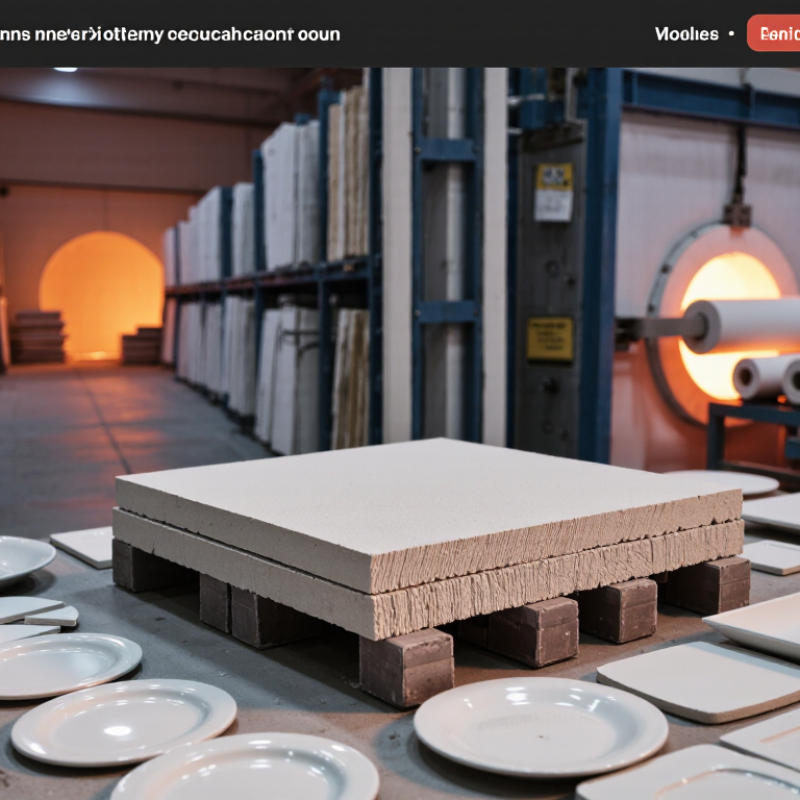
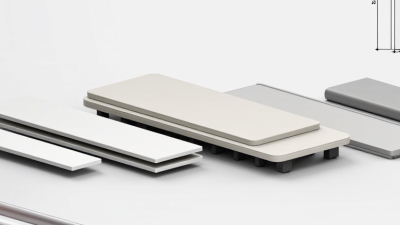
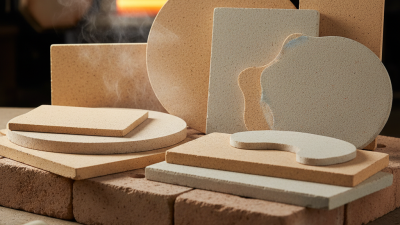
A corundum mullite plate is a refractory kiln furniture component. It is made mainly from corundum and mullite phases. Corundum provides high hardness and refractoriness. Mullite improves thermal stability and resistance to deformation. Together, they form a dense support for fired parts. The plate sits beneath ware, shelves, or setter systems. It separates products from the kiln floor. This simple role matters.
During firing, the plate faces repeated heating and cooling. It must carry weight without warping. It also needs low reaction with glazes, powders, or metal oxides. A suitable grade depends on firing temperature, atmosphere, load, and cycle time. Check working dimensions, thickness, surface flatness, and edge quality. A thicker plate is not always safer. It can store more heat and suffer greater thermal stress. Small cracks deserve attention. They may grow during the next cycle.
In practical kiln work, inspect plates before every campaign. Look for glaze sticking, corner damage, bowing, and hidden hairline cracks. Keep supports aligned and avoid concentrated loads. Preheating helps reduce sudden thermal shock, although the correct ramp depends on the kiln and product. Corundum mullite is strong, but not indestructible. I have learned that careless placement can defeat excellent material. Selection should follow test firing data, not appearance alone. Some assumptions remain uncertain until the plate survives real production cycles.
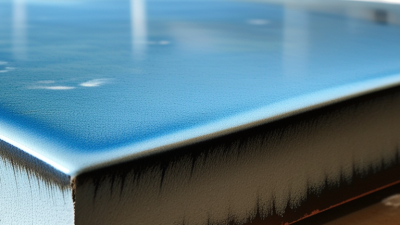
Corundum mullite plates suit industrial kilns exposed to high heat, repeated firing, and heavy ceramic loads. They perform well where ordinary refractory boards deform or react with kiln materials. The right choice depends on temperature, atmosphere, heating speed, and support spacing. Heat changes everything.
Use this plate for oxidizing or neutral atmospheres, especially in ceramic, powder, and heat-treatment kilns. It offers strong resistance to creep, abrasion, and chemical attack. However, rapid cooling can still cause cracking. A plate may survive 1,600°C in testing, yet fail earlier under uneven loading or poor installation. Real kiln conditions matter more than catalog figures.
Tips: Check the maximum working temperature, not only the softening point. Measure the load across the full plate surface. Keep supports level and closely spaced. Leave room for thermal expansion. Avoid placing a cold plate directly into a hot kiln. Small gaps matter.
During selection, compare plate thickness with firing cycles and load weight. Thicker does not always mean safer; it can increase thermal stress and slow heat transfer. Inspect used plates for edge chipping, bowing, and hairline cracks. Replace damaged pieces before they affect product alignment. When the kiln atmosphere contains aggressive vapors, request compatibility data from a qualified refractory engineer. A careful trial run is still wise.
Choosing a corundum mullite plate begins with the kiln’s real working conditions, not only its maximum temperature. Record the firing temperature, holding time, atmosphere, load weight, and heating cycle. A plate used near 1,600°C faces different stress than one used for short, intermittent firing. Measure the supported span and product contact area carefully. Small design errors can create large bending stress.
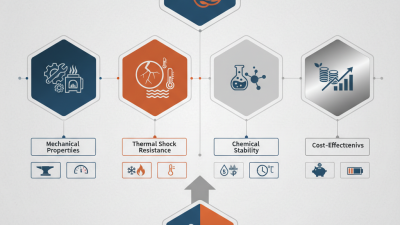
Material evaluation should include alumina content, mullite proportion, apparent porosity, bulk density, and cold crushing strength. Ask for batch test reports, dimensional tolerances, and firing data from the manufacturer. Thermal shock resistance matters when plates move from a hot kiln to a cooler inspection area. Low porosity may improve resistance to slag penetration, but it does not guarantee long service life. Creep performance under load deserves equal attention. A strong plate at room temperature may still deform after repeated heating.
Check surface flatness with a straightedge before installation. Look for edge cracks, warping, and uneven machining marks. Use compatible kiln furniture and avoid concentrated point loads. In practice, engineers sometimes overvalue high alumina content. That is an incomplete judgment. The best selection balances strength, thermal cycling, chemical resistance, dimensions, and replacement cost. Real kiln records should guide the final choice. Supplier claims need verification through samples, inspection, and controlled trial use.
How to Evaluate Material and Performance Requirements
How to Choose Corundum Mullite Plate for Industrial Kilns?
Plate dimensions should match the kiln’s usable chamber, loading pattern, and support spacing. Measure the clear width, not the nominal kiln width. Leave room for thermal expansion and safe handling. In my experience, oversized plates often touch the side walls after repeated firing. That small error can create stress and edge damage.
Choose thickness according to load, span, and firing temperature. A thin plate may work for small, evenly distributed parts. Heavy components need greater thickness or closer supports. Keep unsupported spans short. Consider rounded corners, reinforced edges, and carefully positioned holes when designing the plate. Sharp internal corners can become weak points. The design may look efficient on paper, but kiln movement can expose flaws.
Tips: Make a simple loading sketch before ordering. Mark support points, product weight, and airflow paths. Ask for dimensional tolerances, thermal-shock data, and recommended working limits. If possible, test one plate through a complete firing cycle. Check warpage afterward. No calculation is perfect. I have seen a theoretically suitable design fail because products were loaded unevenly. Allowing a modest safety margin is usually wiser than chasing the thinnest possible plate.
| Selection Dimension | Typical Design Range or Option | Recommended Selection Guidance | Why It Matters in Service |
|---|---|---|---|
| Maximum service temperature | Approximately 1,500–1,700 °C, depending on composition, porosity, atmosphere, load, and firing cycle | Select a plate whose qualified continuous-use temperature is above the actual kiln temperature, not merely equal to the peak setpoint. | A safety margin helps reduce creep, warpage, softening, and premature thermal damage. |
| Plate length and width | Common modular sizes include approximately 300 × 300 mm, 400 × 300 mm, 600 × 300 mm, and 900 × 300 mm; custom sizes are also possible | Choose the smallest practical plate that covers the load area while fitting the kiln hearth and loading system. | Smaller spans generally reduce bending stress and make handling, replacement, and kiln maintenance easier. |
| Plate thickness | Typically 10–40 mm; thicker sections may be required for high loads or long unsupported spans | Use a thicker plate when span, load, firing time, or allowable deflection increases. Avoid adding thickness without checking thermal mass. | Thickness improves stiffness and load capacity but increases heat-up time, weight, and thermal-gradient risk. |
| Aspect ratio | Prefer a compact planform; elongated plates should be supported more frequently | For a fixed area, avoid unnecessarily long and narrow plates unless the kiln layout requires them. | Long unsupported spans are more susceptible to bending, edge damage, and uneven support reactions. |
| Working load | Specify total load in kg or kN, including the plate, products, setters, and any fixtures | Provide the load per plate, load distribution, contact footprint, and expected number of firing cycles to the supplier or design engineer. | High-temperature strength and creep depend strongly on temperature, span, load concentration, and exposure time. |
| Load distribution | Uniformly distributed load is preferred; concentrated point loads require local design verification | Use broad, stable contact areas and avoid placing heavy products near unsupported edges or corners. | Uneven loading can cause local cracking, permanent deformation, and unstable stacking. |
| Support arrangement | Three-point, four-point, perimeter, or grid support, depending on plate size and load | Keep supports level, aligned, and thermally compatible. Reduce unsupported span rather than relying only on a thicker plate. | Poorly aligned supports create bending stress and can cause rocking or fracture during heating. |
| Flatness and warpage | Specify a project tolerance; a practical starting point is about 2–5 mm deviation per metre, subject to size and thickness | Define flatness after firing and identify whether the measurement applies to the full plate or a local area. | Excessive warpage can destabilize products, reduce usable area, and overload individual supports. |
| Edge and corner design | Square edges for maximum packing area; small chamfers or radii are preferred for handling durability | Use rounded or chamfered edges where manual handling, vibration, or repeated loading may cause impact damage. | Stress concentrations at sharp corners increase the likelihood of chipping and crack initiation. |
| Ventilation holes or slots | Optional; use only when required for gas flow, weight reduction, or process design | Keep holes away from corners and high-stress support points, and specify minimum ligament widths around openings. | Openings can improve circulation but reduce effective load-bearing area and introduce stress concentrations. |
| Thermal shock resistance | Prioritize low thermal gradients and controlled heating and cooling rather than relying on material selection alone | Use gradual ramp rates, avoid direct flame impingement, and allow plates to cool sufficiently before unloading. | Rapid temperature changes can create tensile stresses that exceed the ceramic's fracture resistance. |
| Atmosphere compatibility | Suitable for many oxidizing kiln environments; reducing, carburizing, or chemically aggressive atmospheres require validation | Confirm compatibility with vapors, fluxes, alkalis, metal oxides, and process residues before final selection. | Chemical attack can increase porosity, weaken the surface, cause sticking, or shorten service life. |
| Surface finish | Standard cast or pressed surface; machined or ground surface when close dimensional control is required | Select a smoother surface for products that are sensitive to marking, sticking, or dimensional distortion. | Surface texture affects product contact, cleaning, release, and local stress transfer. |
| Open porosity and density | Specify according to load, thermal-shock requirements, chemical exposure, and product-contact conditions | Lower porosity generally supports better resistance to penetration and erosion, while higher porosity may reduce weight and thermal mass. | Density and porosity influence strength, heat capacity, thermal conductivity, permeability, and chemical durability. |
| Kiln clearance | Allow practical clearance around the plate for installation, thermal expansion, and air or gas circulation | Verify the cold and hot dimensions of the kiln, shelves, posts, burner zones, and loading equipment. | Insufficient clearance can cause binding, contact with kiln walls, uneven heating, or difficult removal. |
| Handling weight | Keep the plate within the safe manual-handling limit or provide lifting aids for larger designs | Balance stiffness against weight; divide oversized plates into modular sections when the process allows. | Lower handling weight reduces impact damage, operator risk, and installation time. |
| Quality verification | Check dimensions, thickness, flatness, density, apparent porosity, room-temperature strength, and visual defects | Request a lot-specific inspection record and, for critical service, conduct a representative hot-load or kiln-trial evaluation. | Material properties and dimensional consistency can vary between production lots and directly affect kiln performance. |
Choosing a corundum mullite plate starts with service conditions, not the lowest quotation. Check kiln temperature, load pressure, atmosphere, firing cycles, and thermal shock frequency. Corundum supports high-temperature strength, while mullite improves thermal stability and resistance to deformation. Ask for bulk density, apparent porosity, cold crushing strength, and permanent change on reheating. ASTM C20 provides useful test methods for density, porosity, and water absorption. These figures must use the same testing conditions.
Cost needs a wider calculation. The USGS Mineral Commodity Summaries 2024 reported global bauxite production near 400 million metric tons in 2023. Raw material availability does not guarantee stable plate quality. The International Energy Agency reported that industry uses about 37% of global final energy. A plate that warps after several cycles can increase fuel use, labor, and downtime. I have seen low quotations fail here. The spreadsheet looked convincing. The kiln did not. Compare expected service cycles, replacement time, machining tolerance, and packaging damage rates.
Tips: Request recent batch certificates, dimensional inspection records, and thermal shock results. Confirm whether tests follow ASTM or ISO procedures. Review at least three production batches. Ask for traceability from raw material to shipment. ISO 9001 certification helps, but it does not prove refractory performance. Require a written replacement policy and realistic lead times. A slightly higher unit price may be justified when delivery records are consistent, although this judgment still needs plant-specific evidence.